ISLAMABAD: The Frontier Works Organisation (FWO), backed by the federal government, has sought recovery of around $432 million invested in the proposed 437-kilometre Faisalabad-Peshawar white oil pipeline within four years through a guaranteed transportation tariff, a move aimed at securing the participation of Azerbaijan’s state-owned oil company, Socar.
Thank you for reading this post, don't forget to subscribe!Under a tariff petition submitted to the Oil and Gas Regulatory Authority (Ogra), transportation charges for petroleum products from Faisalabad to Thalian near Rawalpindi and onward to Tarujabba near Peshawar are proposed at around $64 per tonne in 2029, declining gradually to $14.5 per tonne by 2058, the final year of the proposed 30-year tariff period.
Ogra has published the 3,033-page tariff petition along with the project’s Front-End Engineering Design, volume stability report and financial model. The tariff has already received backing from the Economic Coordination Committee (ECC) and the federal cabinet, primarily to meet Socar’s investment requirements. Ogra is expected to approve the construction-stage tariff shortly.
Frontier Oil Company (FOC), a subsidiary jointly involving FWO, Pakistan State Oil (PSO) and Socar, told Ogra that although the pipeline’s capital cost would be considerably higher than road transportation, the tariff would decline over time as capital expenditure is depreciated or amortised and project debt is repaid.
The project is proposed to be financed through a 55:45 debt-to-equity ratio. FOC argued that the declining tariff would eventually benefit consumers, unlike road transportation costs, which generally rise over time.
The pipeline is considered strategically important as it would transport petrol and high-speed diesel from Gatti in Faisalabad to Tarujabba, completing a petroleum pipeline backbone from Karachi to Peshawar.
The project is intended to cater to rising petroleum demand in northern Pakistan, including demand associated with CPEC-related development and increasing vehicle ownership, while reducing the risk of fuel shortages. It is also expected to improve supply reliability and safety in northern Punjab and Peshawar, reduce dependence on road tankers and lower carbon emissions.
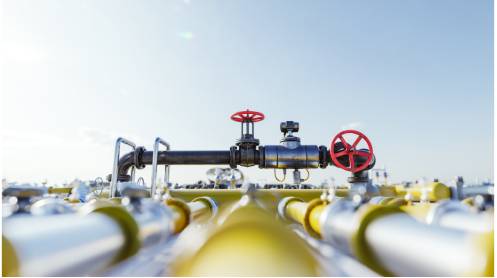
The proposed pipeline comprises a 256km, 20-inch line from Faisalabad to Thalian, with an initial capacity of around seven million tonnes per annum, expandable to 10 million tonnes. A 172km, 12-inch section would connect Thalian with Tarujabba, with a capacity of five million tonnes per annum, while a 9km, 8-inch spur would link Thalian to Faqirabad.
The estimated cost is $320 million for the Faisalabad-Thalian section, $94 million for the Thalian-Tarujabba section and $17.5 million for the spur. Ogra has assessed the project life at 30 years. The total cost, however, is higher than the $300 million approved by the ECC about five months ago, prompting concerns from the finance and power ministries over guaranteed dollar-based returns.
The project is being developed on a government-to-government basis involving Socar, FWO and PSO through a joint project company. It is now being treated as a strategic investment from Azerbaijan after initially being pursued by FWO using local resources.
Power Minister Awais Leghari had previously cautioned against guaranteed dollar-based returns, calling for a thorough review of the project cost, internal rate of return and other investment assumptions in light of Pakistan’s experience with independent power producers (IPPs).
Socar has also sought a “ship or pay” arrangement, under which payments would be made for committed pipeline capacity even if the capacity is not fully utilised. The mechanism is similar to the “take or pay” arrangements used in power purchase agreements.
The finance ministry had questioned the proposed four-year payback period, arguing that dollar-denominated returns should be provided only where foreign investment actually materialises and should not extend to locally financed portions of the project.
It also sought rationalisation of interest-rate assumptions and the weighted average cost of capital and proposed extending the payback period to seven years to reduce the initial tariff burden.
The ministry further proposed that the Petroleum Division, rather than Ogra, should resolve technical issues relating to the Inland Freight Equalisation Margin and the declaration of the pipeline as the default mode of transportation.
The Petroleum Division, however, argued that such changes could make the project unattractive. The ECC subsequently overruled the finance ministry’s demand for revised payouts and the reservations raised by the power minister, maintaining that the project could open new avenues for investment and should be viewed from a broader strategic perspective.
Currently, around 70% of petrol and diesel is transported by road, 28% through the existing pipeline network from Karachi to Machike, and 2% by rail. The new project is expected to increase the share of petroleum products transported through pipelines by around 10 percentage points.
The proposed tariff would be denominated in US dollars and linked to optimal utilisation of the pipeline under a “default mode of transportation” framework.
Under the proposed mechanism, oil marketing companies would be required to commit minimum annual volumes for pipeline transportation, with any shortfall covered through the Inland Freight Equalisation Margin.
Ogra would subsequently develop a regulatory framework to ensure optimal utilisation of the pipeline by declaring it the default mode of petroleum transportation.
Given the project’s high financial stakes and proposed rapid recovery of investment, Ogra had earlier been reluctant to take a regulatory position without clear government backing. The regulator therefore sought ECC approval of key terms and conditions agreed by stakeholders before proceeding with the tariff and construction framework.
Story by Khaleeq Kiani